Winding quality is not decided only at the final stage
In PP and PET strap production, the winder is the final machine that forms the finished roll. Whether the roll surface is even, the strap is aligned, and the final roll is suitable for shipment and storage is directly connected to winder performance.
However, unstable strap winding does not always mean the winder is the only cause. The winder is the final stage, but if the strap supplied to it is already unstable or inconsistent, even precise winding control may not be enough to produce a clean finished roll.
In other words, a winding defect may look like a winder problem, while the actual cause may be a quality variation that started earlier in the strap extrusion line.
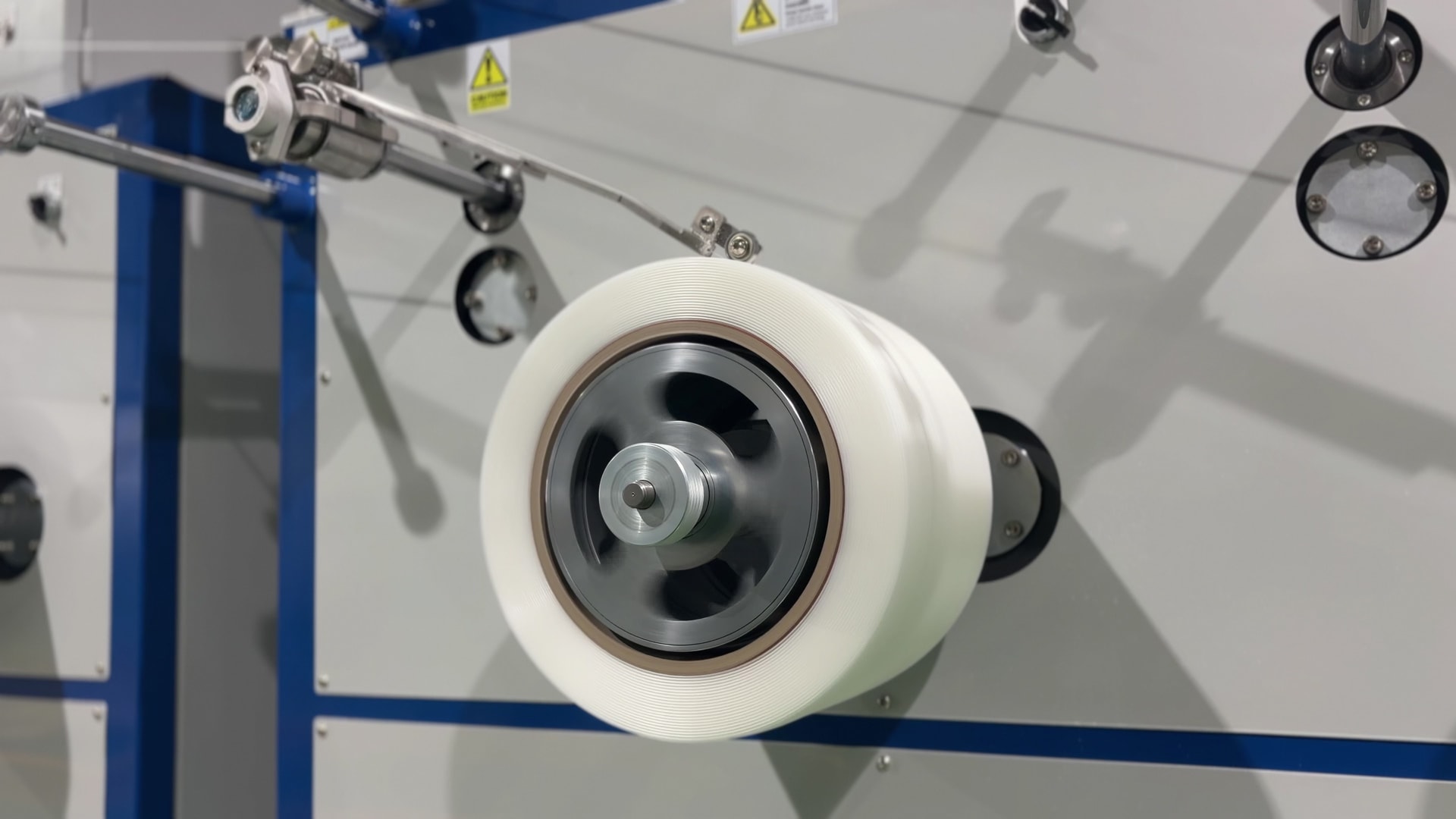
How strap condition affects winding
A winder works best when it receives strap with consistent width, thickness, straightness, and tension behavior. When strap quality changes continuously, the winder must keep compensating for conditions that are not stable.
The following strap conditions can directly affect winding quality.
| Check point | Possible winding result |
|---|---|
| Strap width variation | Uneven roll edge, unstable layer alignment |
| Thickness variation | Uneven roll surface, local pressure concentration |
| Strap curve or twist | Side tracking, irregular layer formation |
| Tension fluctuation | Loose winding, excessive compression, unstable roll shape |
| Surface condition issue | Slip, friction change, unstable alignment |
These issues are difficult to solve only by changing winder settings. A winder arranges the supplied strap into a roll, but it cannot remove the physical variation already present in the strap itself.
Narrower straps are more sensitive
The narrower the strap, the more sensitive the winding process becomes. A wider strap may absorb small variation across the roll width, but a narrow strap can show visible winding problems from small changes in width, straightness, or tension.
Narrow PP and PET straps can be more prone to:
- Irregular steps at the roll edge
- Strap tracking to one side
- Disordered strap alignment during winding
- Repeated instability in finished roll shape
- Higher tension control difficulty at higher line speed
For this reason, stable production of narrow strap requires not only precise winder control, but also stable width control, cooling, stretching, and heat setting from the extrusion line.
Separate the causes before changing settings
When winding defects occur, it is important to inspect the strap condition before it enters the winder, instead of adjusting only the winder first. If the cause is not separated correctly, the same issue can repeat, and unnecessary setting changes may make the production condition less stable.
A practical troubleshooting check can include the following points.
| Area | What to check |
|---|---|
| Strap extrusion line | Width, thickness, straightness, cooling uniformity, stretching stability |
| Supply tension | Tension fluctuation before the winder |
| Strap surface | Slip, roughness, contamination, surface damage |
| Winder setting | Traverse movement, tension setting, roll pressure, alignment |
| Finished roll | Surface uniformity, edge condition, internal tightness |
The key question is whether the winder is failing to control a stable strap, or whether the strap entering the winder is already unstable. Both can create similar winding defects, but the corrective actions are different.
Good winding depends on stable extrusion
High winding quality requires precise winder technology. But precision alone is not enough. The winder can perform properly only when the extrusion line supplies strap with stable and consistent quality.
Plants should view winding as part of one continuous process from extrusion, cooling, stretching, heat setting, and winding. This perspective helps production teams find the actual cause of winding defects faster and reduce repeated quality issues.
Winding quality is also connected to the marketability of the final product. A roll with a smooth surface and stable shape is easier to store, ship, and use in downstream packaging operations.
Conclusion
When winding becomes unstable, checking the winder first is a natural response. But the winder should not be assumed to be the only cause.
If the strap itself is inconsistent, the defect may appear at the winder. This is especially important for narrow straps, where small variations can have a larger effect on roll formation.
To produce stable finished rolls, plants need both precise winder performance and consistent extrusion conditions, including strap dimension control, tension stability, and strap specification management. Good winding is completed at the final machine, but it is built on the stability of the entire strap production process.